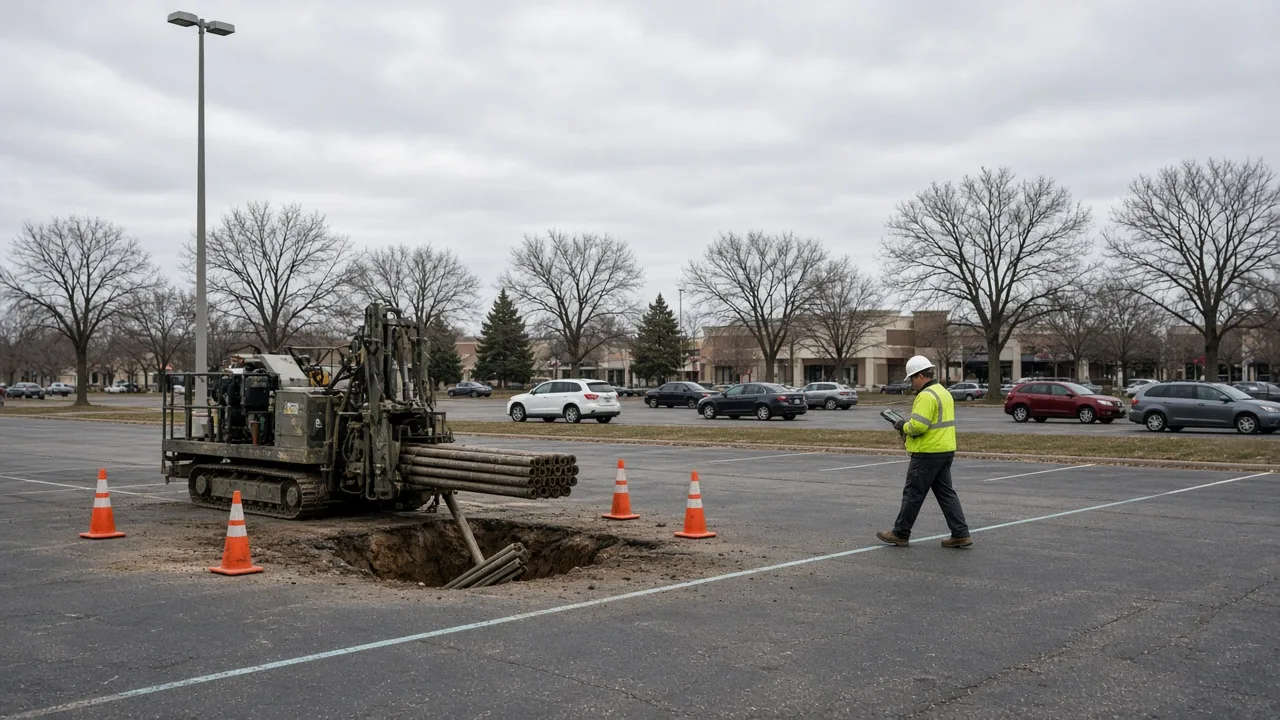
Retail centers, office parks, and homes in Orland Park regularly need a new underground run that has to cross a parking lot, a drive, or a finished yard. A boring contractor puts that pathway in without opening a trench across the whole route. Using horizontal directional drilling, the crew steers a bore from one pit to another and pulls conduit or pipe back through while the surface stays in place. Here is what that work involves and what to ask before you hire someone to do it.
What a boring contractor actually does
Directional boring work covers the underground part of a project. The contractor plans the bore path, sets up the rig at an entry pit, drills a small pilot hole, tracks the drill head from the surface, enlarges the hole to the size the product needs, and pulls the conduit or pipe into place. The surface between the entry and exit pits is not dug up.
You may see the same trade called a drilling contractor, a directional drilling company, or one of the horizontal directional drilling contractors in the area. The names differ, but the job is the same: a guided bore that installs a pathway beneath pavement, landscaping, or other surfaces that should not be cut open.
Common reasons Orland Park properties call for a bore
Commercial sites along busy retail corridors often need new runs under a parking lot for lighting, signage, or charging equipment. Cutting a trench across an open lot means closed rows, steel plates, and a long patch afterward. A bore keeps most of the lot open and limits the disturbed area to the pits.
Dark light poles are another frequent call. When conduit feeding parking lot lighting is crushed or broken, a new pathway can be bored in alongside the old one. On residential properties, the same method can run underground electrical conduit under a driveway or lawn to a garage, a gate, or outdoor lighting.
Questions to ask a boring contractor
A short conversation up front tells you a lot about how the job will go. Useful questions include:
- How will existing utilities along the route be located before drilling starts?
- Where will the entry and exit pits go, and how much room does the rig need?
- What product size and type will be installed, and how deep will the bore run?
- Which parts of the job are included, and which stay with an electrician, plumber, or other trade?
- How will the pits be restored, and who handles any patching or landscaping?
- Do any permits or owner approvals apply, and who is responsible for them?
Clear answers to those questions are a better guide than a single number on a quote. They show whether the contractor has thought through the route, the site, and the handoff to the other trades on the project.
What the bore covers, and what it does not
A&P Directional Drilling installs the underground pathway: the bore and the conduit or pipe pulled into it. Pulling wire, electrical terminations, panel work, and gas tie-ins are handled by the licensed trades responsible for that work. Pit restoration follows the scope agreed with the owner or general contractor. Knowing where that line sits before the work starts keeps the schedule moving and avoids surprises at the end.
How the work fits a busy site
The footprint of a bore is small compared with a trench: the rig, a fluid system, the pits, and space to stage rods and product. On a retail or office property that footprint can usually be placed outside the main traffic lanes, and the work can often be sequenced so parking and entrances stay usable.
For a step-by-step look at pilot hole, reaming, and pullback, see how directional drilling works. If the run has to cross a home driveway or sidewalk, read about directional horizontal drilling under driveways and sidewalks. Larger commercial and industrial crossings are covered in horizontal bore drilling for industrial and commercial sites.
Getting ready to call
Before you reach out, note where the run starts and ends, what it crosses, what product goes in the bore, and whether utilities have been marked. With that information, a boring contractor can scope the job on your Orland Park property and plan the bore around how the site is used every day.
Need a directional drilling or conduit pathway?
Call us or tell us about the project and we will follow up with a free estimate.