Industrial and commercial properties in Joliet often need a new underground run that crosses something that cannot be shut down: a truck yard, a loading dock apron, an entrance drive, or a rail spur. Horizontal bore drilling is the trenchless way to put a pathway under those surfaces. A horizontal directional drilling rig sets up at one end, steers a bore to the other, and pulls conduit or pipe back through while the surface stays in use.
What a horizontal bore is
A horizontal bore is a guided underground hole that runs roughly level between an entry pit and an exit pit. The crew drills a small pilot hole first, tracks the drill head from the surface, and then enlarges the hole to the size the product needs. Conduit, drainage pipe, or other product is pulled into the finished hole. The ground between the two pits is not opened.
People use several names for the same work: horizontal bore drilling, horizontal drilling, directional boring, or simply a bore. The method is the same. What changes from job to job is the length of the run, the depth, the product size, and what sits above and around the bore path.
Why industrial sites in Joliet lean on boring
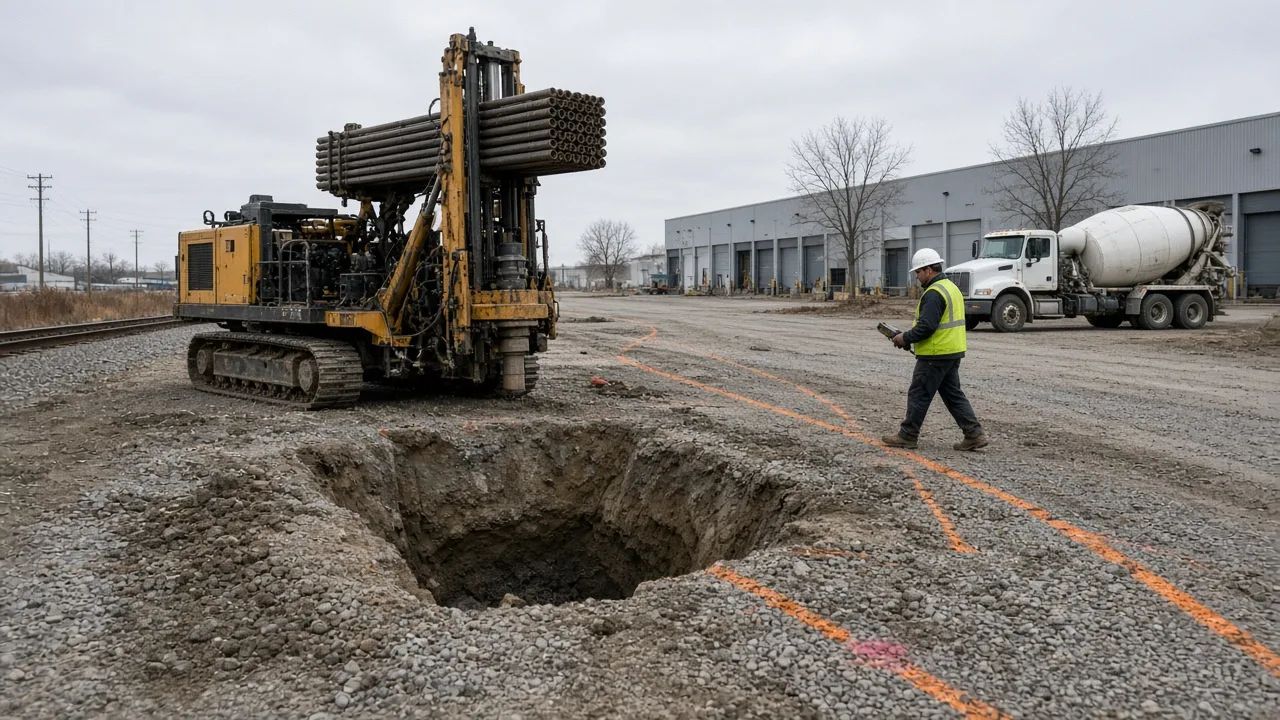
Distribution centers, warehouses, and industrial parks depend on paved areas that carry heavy traffic all day. Cutting a trench across a truck court or a main drive means detours, steel plates, and a large concrete or asphalt patch at the end. A bore keeps that surface in service and limits the disturbed area to the pits at each end.
The same logic applies to crossings under pavement on retail and office properties, and to runs that must pass under railroad tracks. Rail and roadway crossings usually carry permit and owner requirements that set depth and approval steps before work begins, so those are confirmed during planning rather than on the day of the bore.
Planning the bore path
The bore path is the line and depth the drill head will follow. Planning it starts with locating existing utilities. Gas, water, electric, fiber, and storm lines can share the same corridor the new run needs, and the path has to clear them with room to spare. Entry and exit pits are placed where the rig fits and where the product can be laid out for pullback.
Soil and site conditions shape the plan as well. Clay, fill, gravel, and buried debris all affect how the head steers and how much drilling fluid the bore needs. On an older industrial lot, old foundations or abandoned lines can show up where nobody expected them, which is one reason locating and a careful pilot bore matter.
The directional bore rig and the crew on site
A directional bore rig pushes and rotates drill rods from the entry pit. A transmitter behind the drill head reports depth and position to a locator operator walking the bore path above. The operator at the rig uses that information to correct the steering as the bore advances. Once the pilot reaches the exit pit, a reamer opens the hole to final size and the product is pulled back toward the rig.
The footprint is small compared with a trench: the rig, a fluid system, the pits, and room to stage rods and product. On a busy site that footprint can usually be placed out of the main traffic lanes.
What the bore delivers, and what it does not
A&P Directional Drilling installs the underground pathway. That pathway is often underground electrical conduit for lighting, power, or communications, or pipe for drainage. Pulling wire, making electrical terminations, and gas tie-ins stay with the licensed trades that own that work, and pit restoration follows the scope agreed with the owner or general contractor.
When a property owner is weighing a bore against an open trench, the tradeoffs are laid out in horizontal directional drilling versus open trenching. For a closer look at each step from pilot hole to pullback, see how directional drilling works. A common reason commercial sites call for a bore in the first place is covered in why a light pole stopped working.
Questions to settle before scheduling
Know what product goes in the bore and its size, where the run starts and ends, and what it crosses along the way: pavement, landscaping, a drive, or a rail line. Confirm whether utilities have been located, whether any permits or railroad or road owner approvals apply, and how much room the site has for the rig and the pits. With those answers in hand, a horizontal bore on a Joliet industrial or commercial site can be planned around the operation instead of interrupting it.
Need a directional drilling or conduit pathway?
Call us or tell us about the project and we will follow up with a free estimate.